How a SaaS lead-engagement platform grew from a library of templates into a fully custom, data-driven consumer experience product — and how I built and led the UX team to make it happen at scale.
When I joined PERQ Software in 2015 as Lead UX Architect, the product was conceived as an additive technology layer — a set of branded, interactive experiences a customer could deploy directly on top of their existing web platform to drive lead generation and conversion. The three core business verticals were multi-family dwelling communities, automotive dealerships, and furniture retailers.
My initial mandate was to design a wide array of templates that powered PERQ's lead engagement and conversion platform. These experiences ranged from credit pre-approvals and shopping guides to purchasing quizzes and reward-based interactions — each one engineered to attract and educate buyers while producing higher-quality, more qualified leads for sales teams.
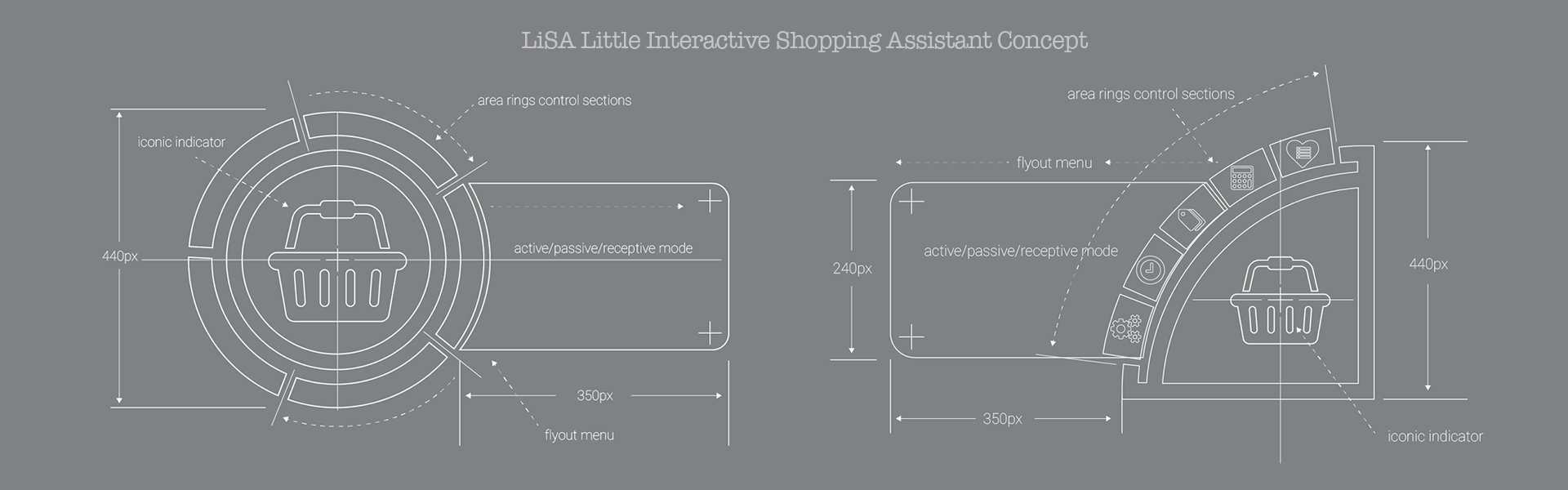
Shopping assistant experience — an interactive buying guide that educated consumers and surfaced qualified purchase intent for sales teams.
PERQ's lead engagement platform in action — interactive consumer experiences deployed as an additive layer on customer websites.
Lead GenerationConversion OptimizationMulti-Vertical SaaSTemplate Design
02 — The Shift
Customers didn't want to do it themselves
The templates proved highly effective — attracting buyers, educating them through the funnel, and converting to stronger leads. But testing the platform in the hands of real customers revealed a critical insight that would reshape the entire business model: PERQ's customers had no interest in setting up and managing their own experiences. They wanted PERQ to do it for them.
"Customers weren't buying a toolkit — they were buying an outcome. They wanted PERQ to create bespoke, data-driven consumer journeys within their own business context. That changed everything."
This pivot — from self-serve templates to fully custom, data-driven consumer experiences — meant that the product's value proposition fundamentally shifted. Instead of giving customers a platform to build on, PERQ would become the designer and operator of unique experiences tailored to each client's brand, audience, and conversion goals. The demand quickly outpaced what a single UX architect could deliver.
🔁
Business model pivot
Moving from a self-serve template model to a fully managed, custom-experience service required a fundamentally different delivery capability — one that didn't yet exist.
📈
Demand exceeded single-person capacity
As client engagements multiplied across three verticals, the volume and complexity of custom UX work made it impossible for one designer to maintain quality and consistency at scale.
🏗️
No UX infrastructure existed
There was no design system, no shared component library, no established research process, and no formal methodology for how UX work should be approached across the growing team.
03 — Building the Team
From sole architect to department lead
The pivot required me to transition quickly from being the sole UX practitioner to building and leading an entire UX department. I hired, onboarded, and developed a team of six UX designers and researchers who could execute custom experiences at the same quality level I had established — but across a much larger volume of client engagements and at a pace the business demanded.
Building the team meant more than filling seats. I developed career path rubrics that gave each designer a clear understanding of where they were and where they could grow. I ran regular one-on-ones, provided structured feedback to both new hires and existing team members, and evaluated performance against meaningful UX craft standards. As the team grew, I also took on an elevated stakeholder role — representing UX strategy and priorities directly to PERQ's leadership.
👥
Team Building
Recruited, interviewed, and hired six UX designers and researchers from scratch, building the department's foundational talent layer
🗺️
Career Rubrics
Developed role-level rubrics defining competencies, growth milestones, and expectations across junior, mid, and senior designer tracks
💬
1:1s & Feedback
Ran regular structured one-on-ones, delivering honest developmental feedback and coaching designers toward increasing craft and ownership
🎓
Lunch & Learn Sessions
Launched recurring internal learning sessions for junior designers, covering UX craft, industry trends, research methods, and professional development
📊
Performance Evaluation
Established a formal review cycle with clear evaluation criteria, ensuring consistent standards across the team and a fair basis for growth conversations
🤝
Stakeholder Partnership
Represented UX strategy and team priorities in executive stakeholder sessions, advocating for user-centered decisions at the business level
04 — Research, Process & Infrastructure
Building the foundation that made scale possible
A team of six designers producing custom experiences across three verticals can only maintain consistency and quality if it's supported by strong infrastructure. I developed a research and development strategy for the team, established best practices for approaching projects, and built the design systems and tooling that kept work aligned and accelerated delivery.
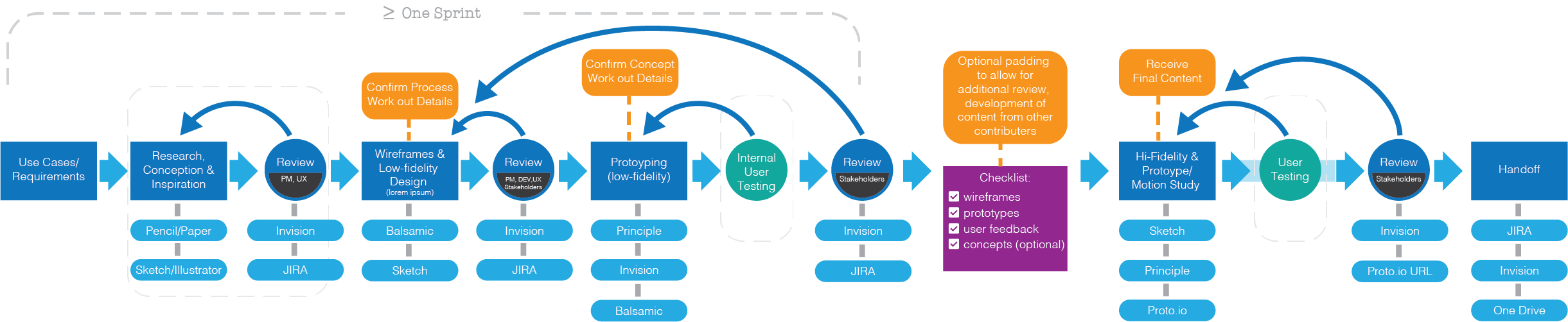
PERQ UX process framework — the documented approach adopted across the team to ensure consistency from discovery through delivery.
PERQ design system — a shared atomic library covering colors, type, components, patterns, and templates used across all three verticals.
Alongside the design system, I adopted agile delivery methodologies to bring structure and rhythm to the team's workflow. Scrums, story pointing, backlog grooming, sprint planning, sprint reviews, and retrospectives became the operational backbone — giving the team a shared language, predictable cadence, and a built-in feedback loop for continuous improvement.
1
R&D Strategy
Developed a structured research and development strategy for the team — defining how discovery, user testing, and insight synthesis would be approached consistently across all client engagements.
2
Design System & Component Library
Built a robust design system and shared component library to ensure visual and interaction consistency across experiences, accelerate production speed, and reduce rework across the team.
3
Agile UX Methodology
Established agile best practices including scrums, story pointing, backlog grooming, sprint planning, reviews, and retrospectives — integrating UX work smoothly into the engineering delivery cycle.
4
Best Practices & Standards
Defined and documented UX best practices — from research methods and artifact standards to handoff protocols — creating a shared foundation that new hires could onboard into quickly.
Custom, data-driven journeys across three verticals
With the team, infrastructure, and process in place, PERQ's product could deliver fully bespoke consumer experiences at scale. Each vertical required a distinct UX approach — automotive buyers needed credit pre-qualification flows and inventory-driven shopping assistants; multi-family prospects needed floor plan explorers and community comparison tools; furniture shoppers needed style quizzes and purchase configurators.

Automotive banner experience — an animated engagement layer deployed across dealership websites to initiate the consumer journey and capture lead intent.
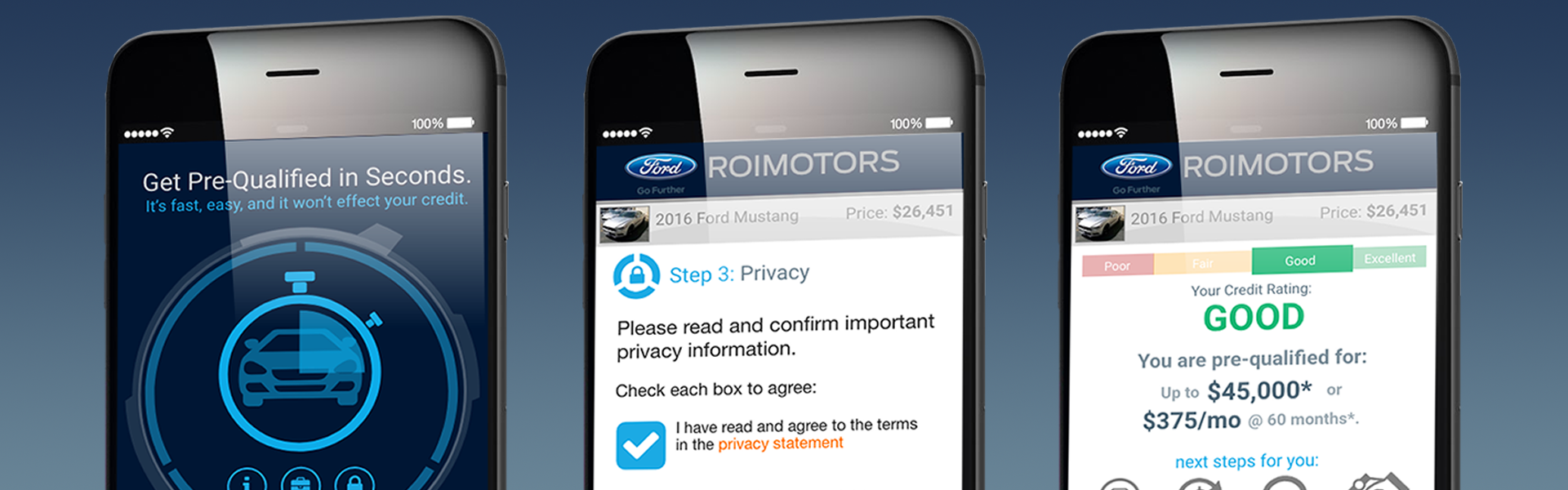
Automotive credit pre-qualification experience — guiding buyers through a streamlined flow that surfaced financing eligibility and produced higher-quality dealer leads.
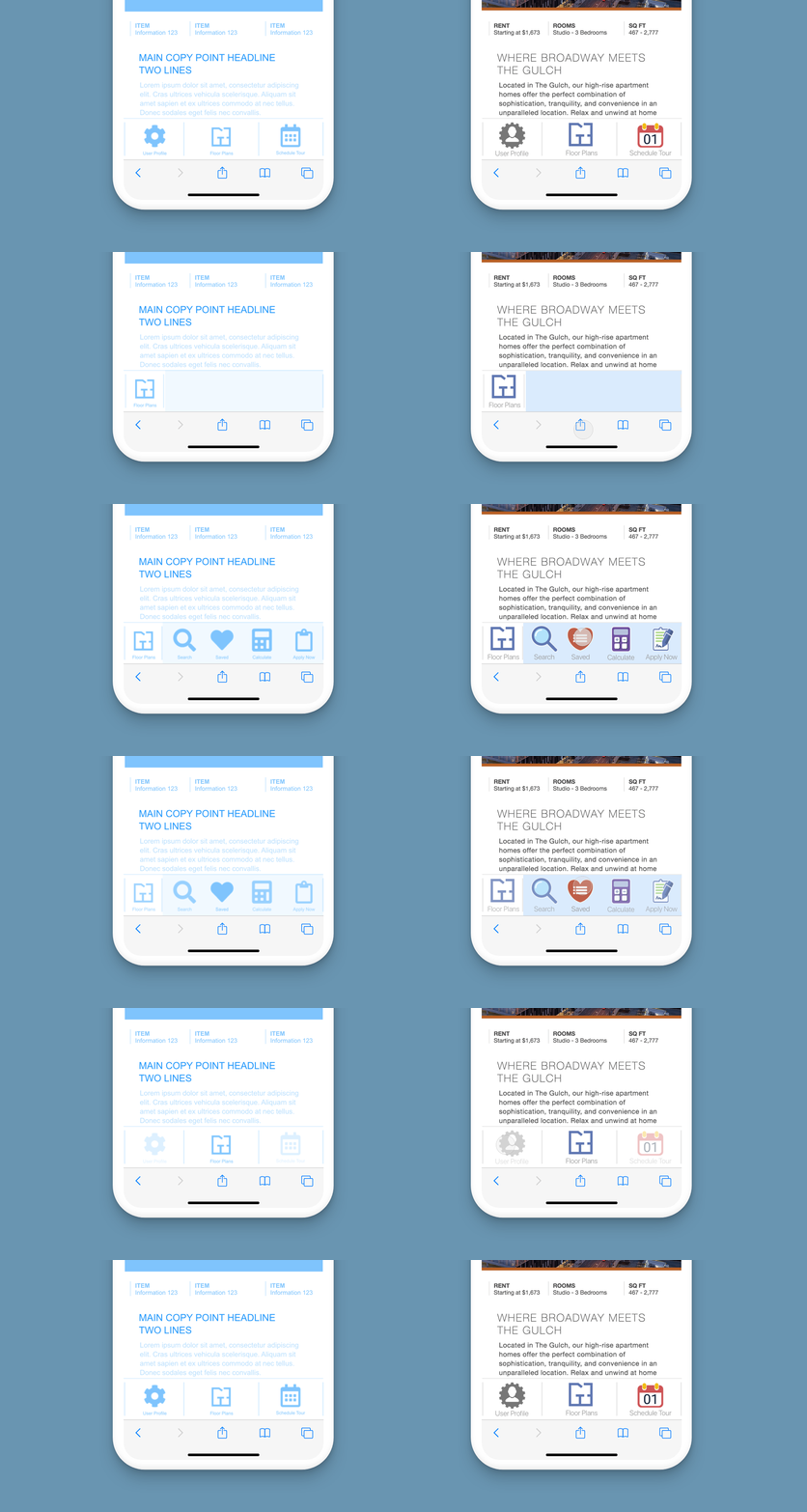
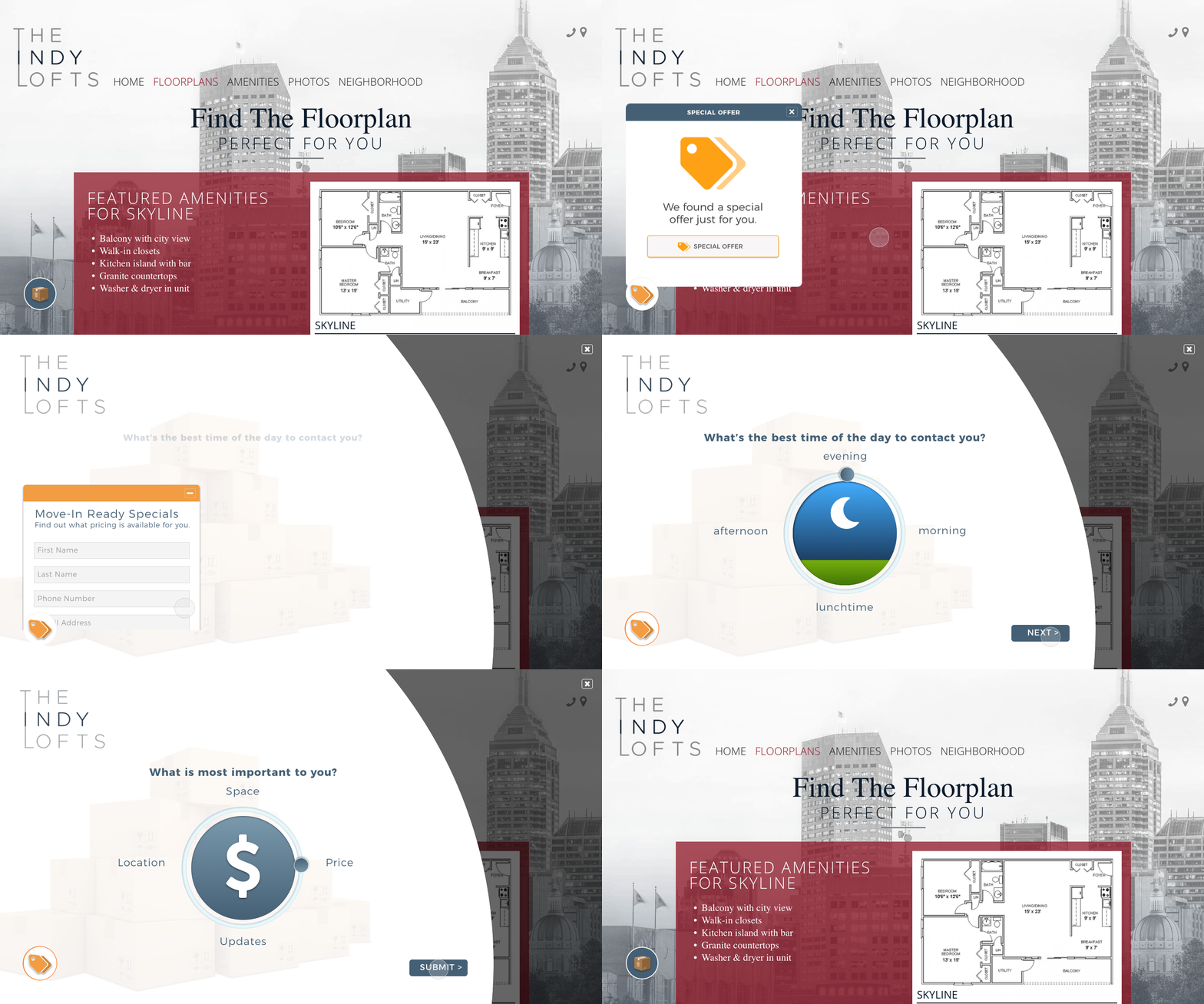
Multi-family dwelling experience — an interactive apartment discovery and comparison journey helping prospects evaluate communities and driving lease conversions.
Furniture retail shopping assistant — a style-and-needs quiz that matched buyers to relevant products, increasing average session value and reducing time-to-purchase.
06 — Mobile & Motion
Designing for how consumers actually engage
As mobile usage across PERQ's three verticals grew, ensuring that every experience translated seamlessly to smaller screens became a core design priority. Rigorous mobile UX reviews were conducted to audit interaction models, evaluate touch target sizing, assess reading legibility, and identify friction points unique to the mobile context.
Motion design played an equally important role. Static screens couldn't fully communicate complex interaction models — especially for multi-step flows involving floor plan exploration, product configuration, and guided quiz experiences. Motion studies were developed to document and validate key interaction sequences before they reached engineering.
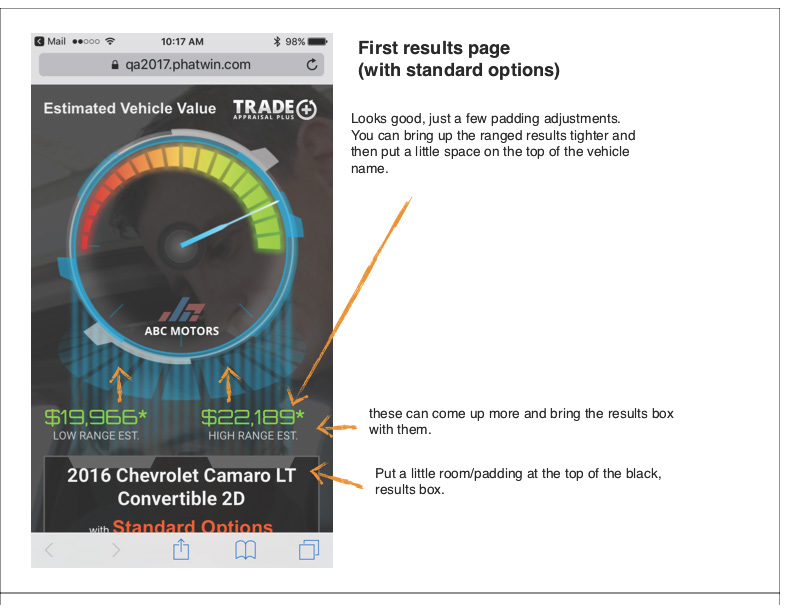
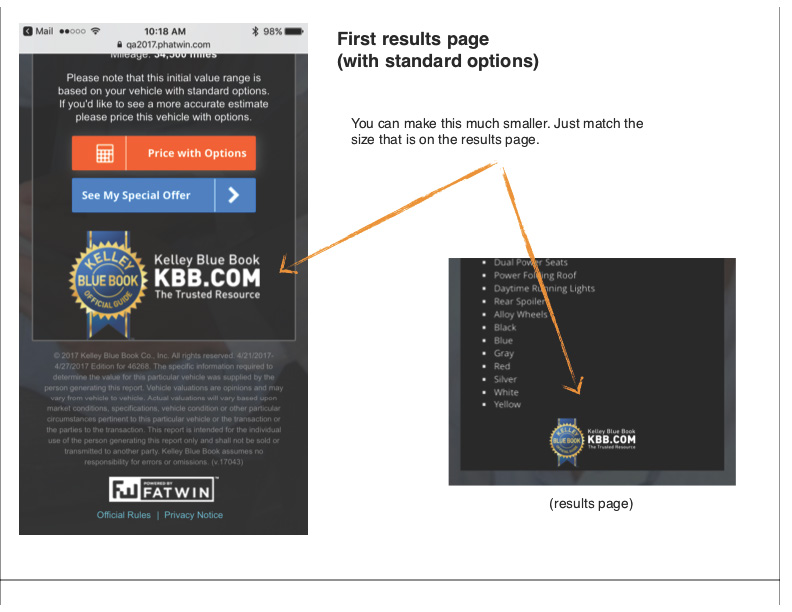
Mobile UX review — page 1. Systematic audit of interaction models, touch target sizing, and flow legibility across key consumer-facing screens.
Mobile UX review — page 2. Continuation of the review documenting recommended improvements, annotated friction points, and revised interaction patterns.
Floor plan motion study — an animated interaction prototype demonstrating the multi-family floor plan exploration experience, developed for stakeholder review and developer handoff.
07 — Outcomes & Impact
From one designer to a scaled UX operation
1M+
Consumers reached across Automotive, Multi-Family, and Furniture Retail markets
6
UX designers hired, developed, and delivering custom experiences at scale
3
Distinct market verticals served with purpose-built consumer experience frameworks
What was built and delivered
✓
A fully operational UX department — six designers and researchers hired, onboarded, and delivering custom consumer experiences across all three business verticals.
✓
A shared design system and component library — giving the team a consistent visual and interaction language that accelerated delivery and maintained quality at scale.
✓
An agile UX workflow — scrums, story pointing, sprint planning, reviews, and retrospectives integrated seamlessly with engineering delivery cycles.
✓
Career infrastructure for the team — rubrics, evaluation frameworks, and regular 1:1s that supported designer growth and built a culture of craft and continuous improvement.
✓
Bespoke consumer journeys at scale — custom, data-driven experiences across Automotive, Multi-Family, and Furniture Retail that collectively reached over one million consumers.
Reflection
PERQ was where I made the transition from individual contributor to people leader — and where I learned that the hardest design challenge isn't the interface, it's the organization. Building a team that can consistently produce excellent, custom work requires the same human-centered thinking as designing the products themselves: understanding what people need to do their best work, removing the friction that blocks them, and creating the conditions for growth.
The design system, the agile process, the lunch-and-learns — none of these were overhead. They were the product. They were how six designers could operate as one cohesive team and reach one million consumers without compromising on quality or speed.