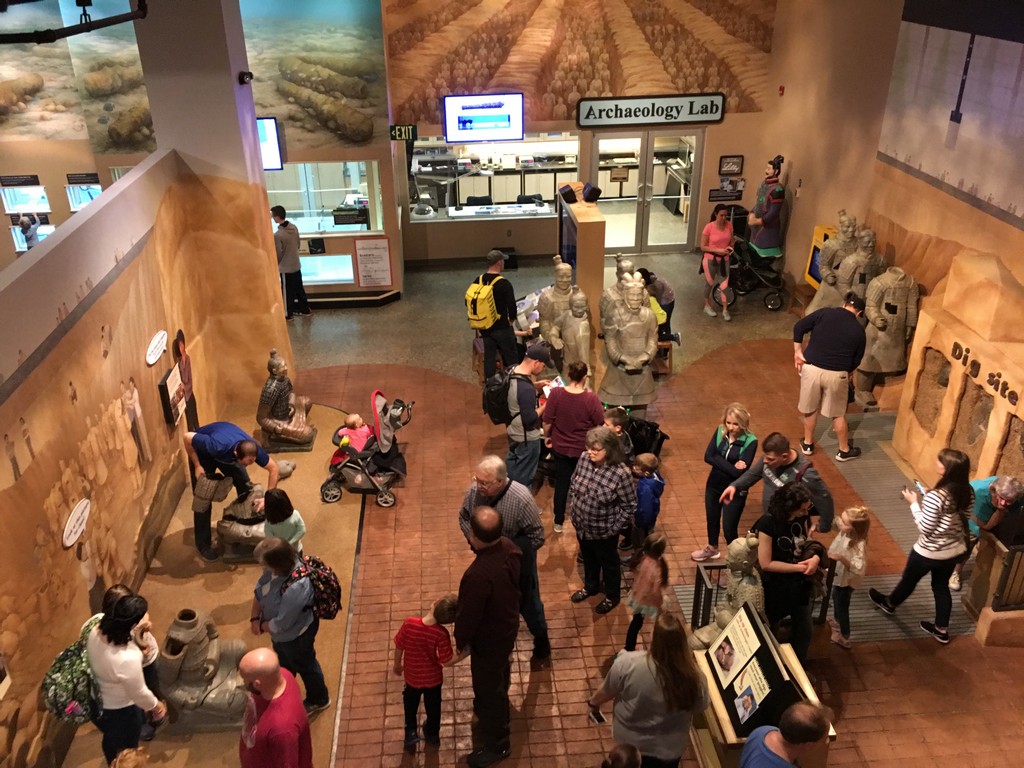
National Geographic wanted kids to learn that the Terra Cotta Warriors were once brightly painted. The tan figures you see in photos today lost most of their paint over the centuries. Scientists can still work out the original colors by chemically analyzing pigment left on surviving fragments, and that's the idea we had to get across to an eight-year-old on a field trip.
I worked on this one from discovery all the way through installation: research, flows, wireframes, prototypes, testing, visual design, and delivery.
Putting RFID chips in the shards
Earlier that year I'd built a game for the museum's Nickelodeon "Dora and Diego" exhibit that used RFID chips sewn into stuffed animals. Kids loved it. So for this project I wondered what would happen if we put coded chips inside replica fragments of the warriors.
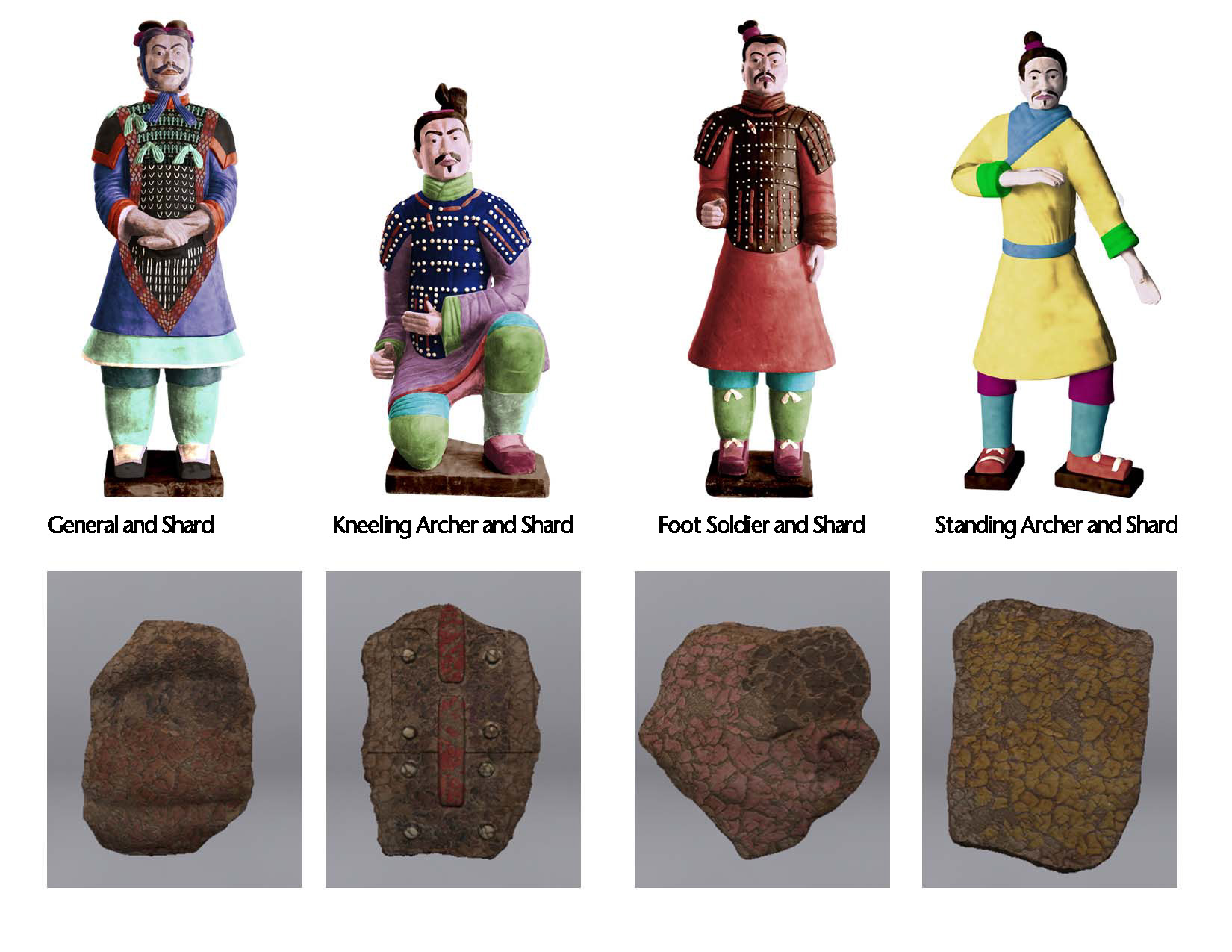
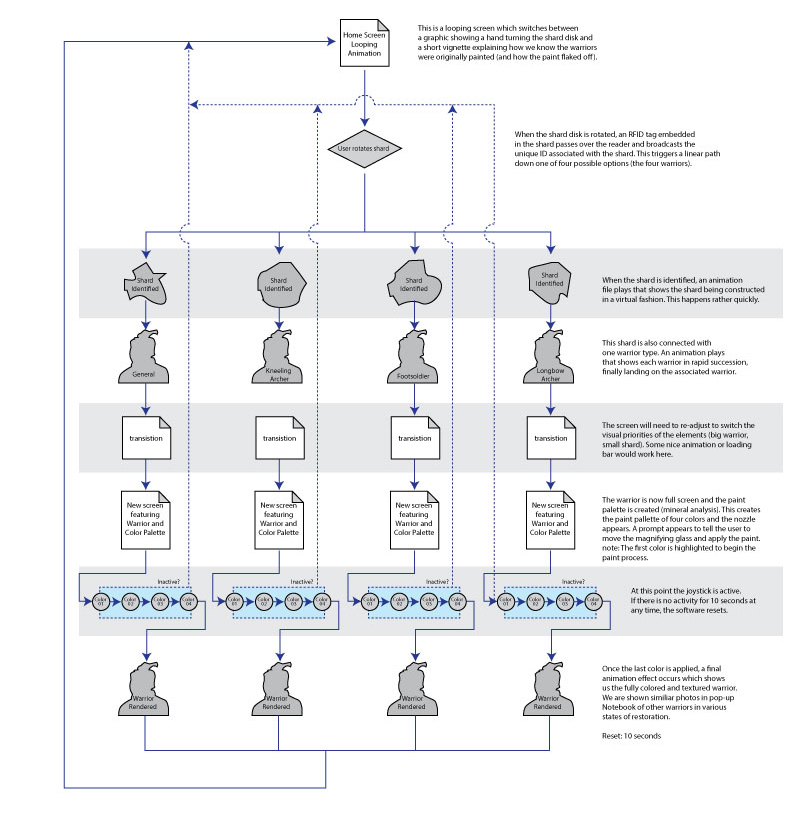
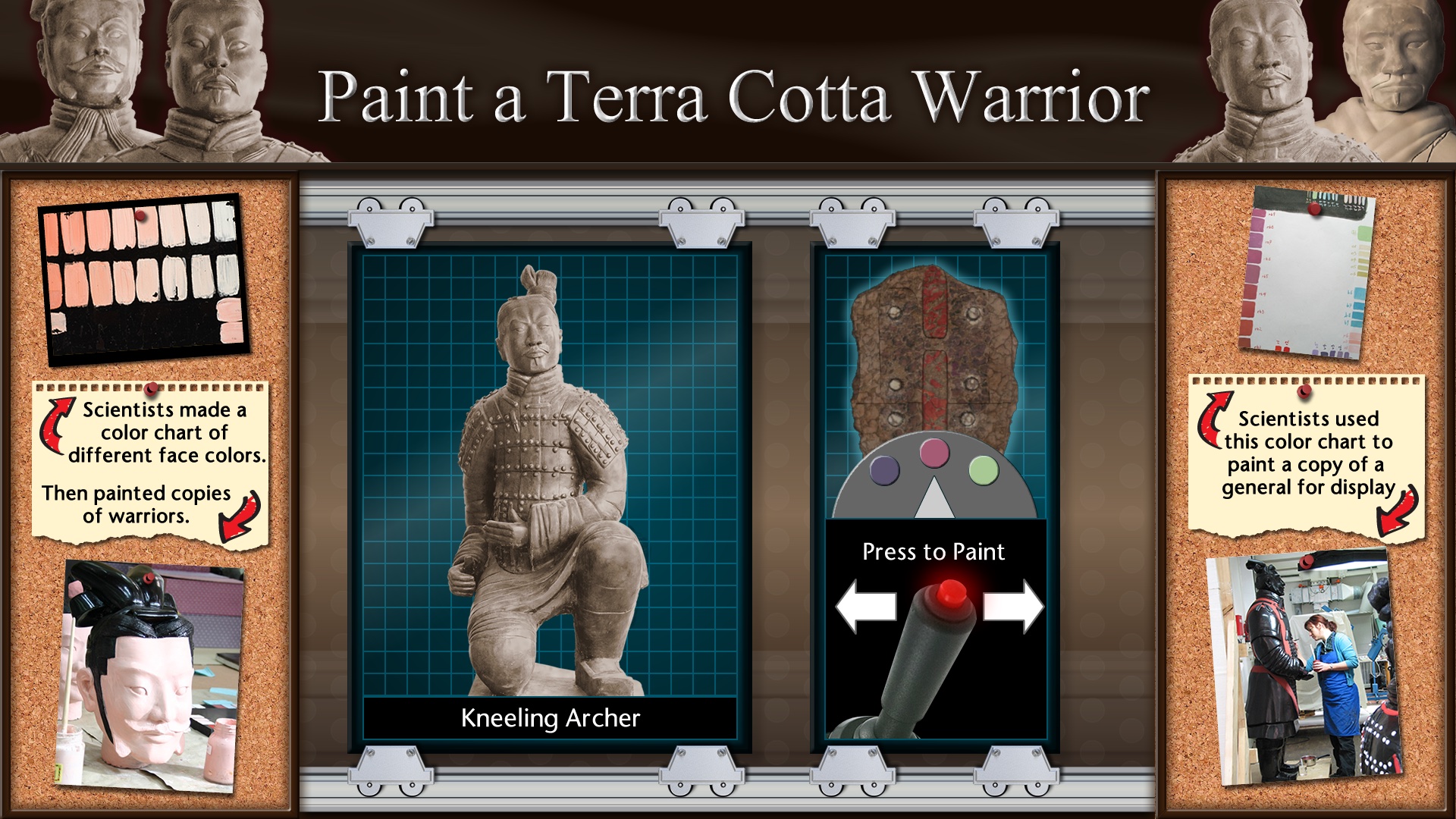
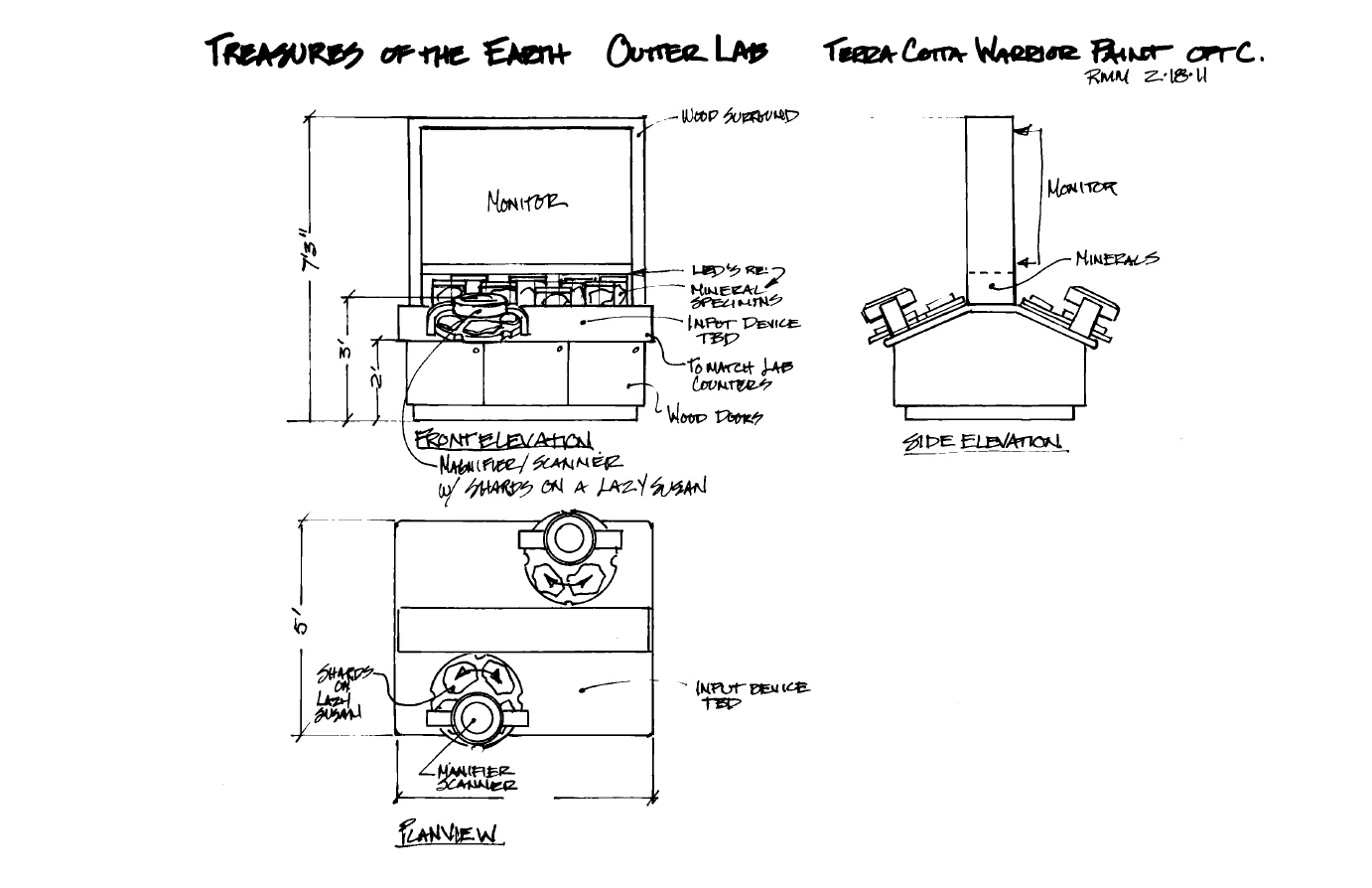
A visitor picks up a shard and sets it on the reader. The kiosk works out which type of warrior it came from and which pigments it would have had. Then they paint that warrior on the touchscreen and can email themselves a copy.
Working it out with the education team
I started with process flows and storyboards so the museum's education staff could react to the whole experience before any screens existed. We went through several rounds. They kept an eye on the learning goals and on whether the science held up, and I kept pushing on whether a kid would actually finish it.
After that came wireframes in Balsamiq and Sketch, then clickable prototypes for heuristic reviews and usability testing. Under all of it was a lot of reading on how the warriors were originally painted.
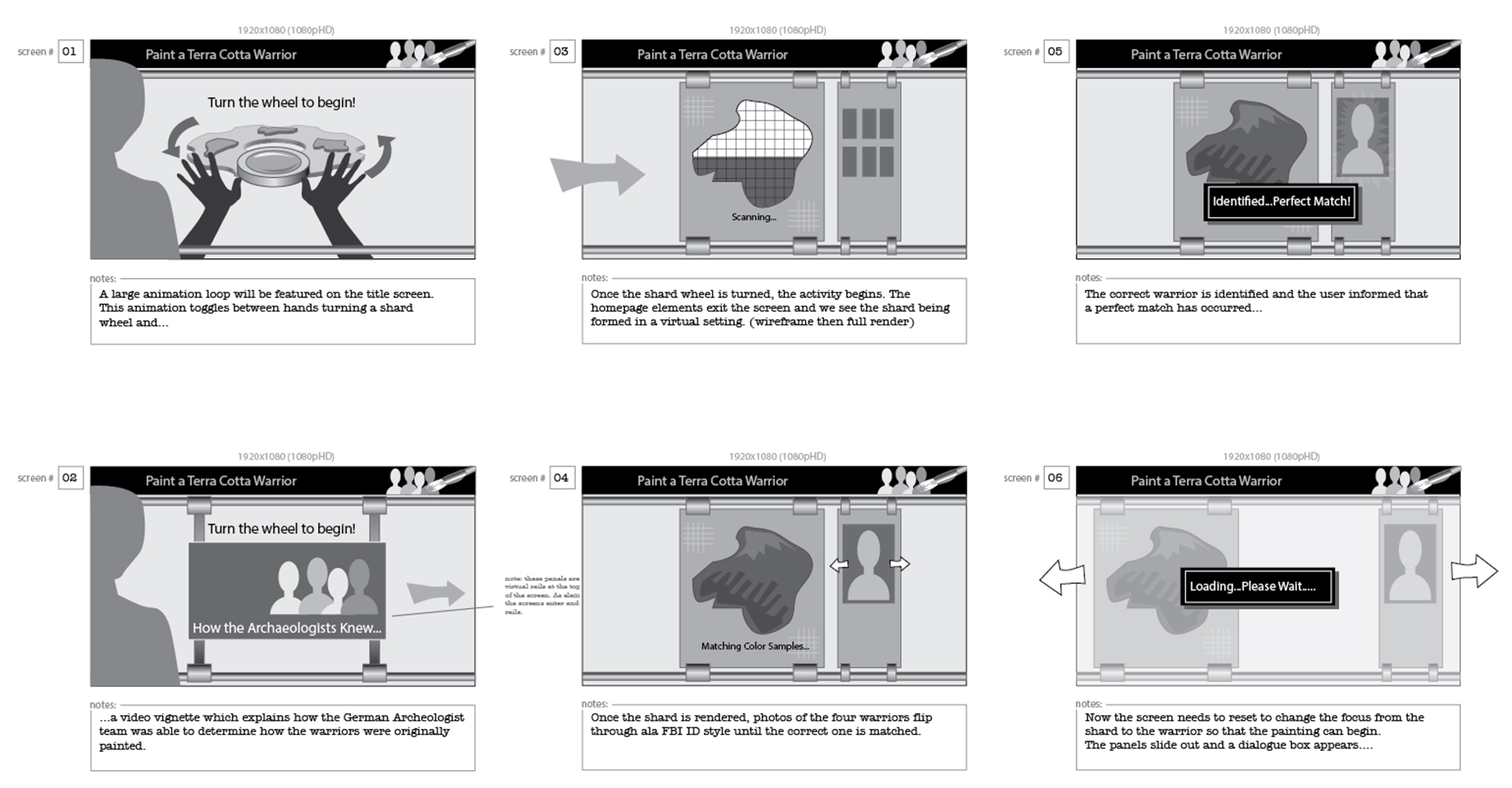
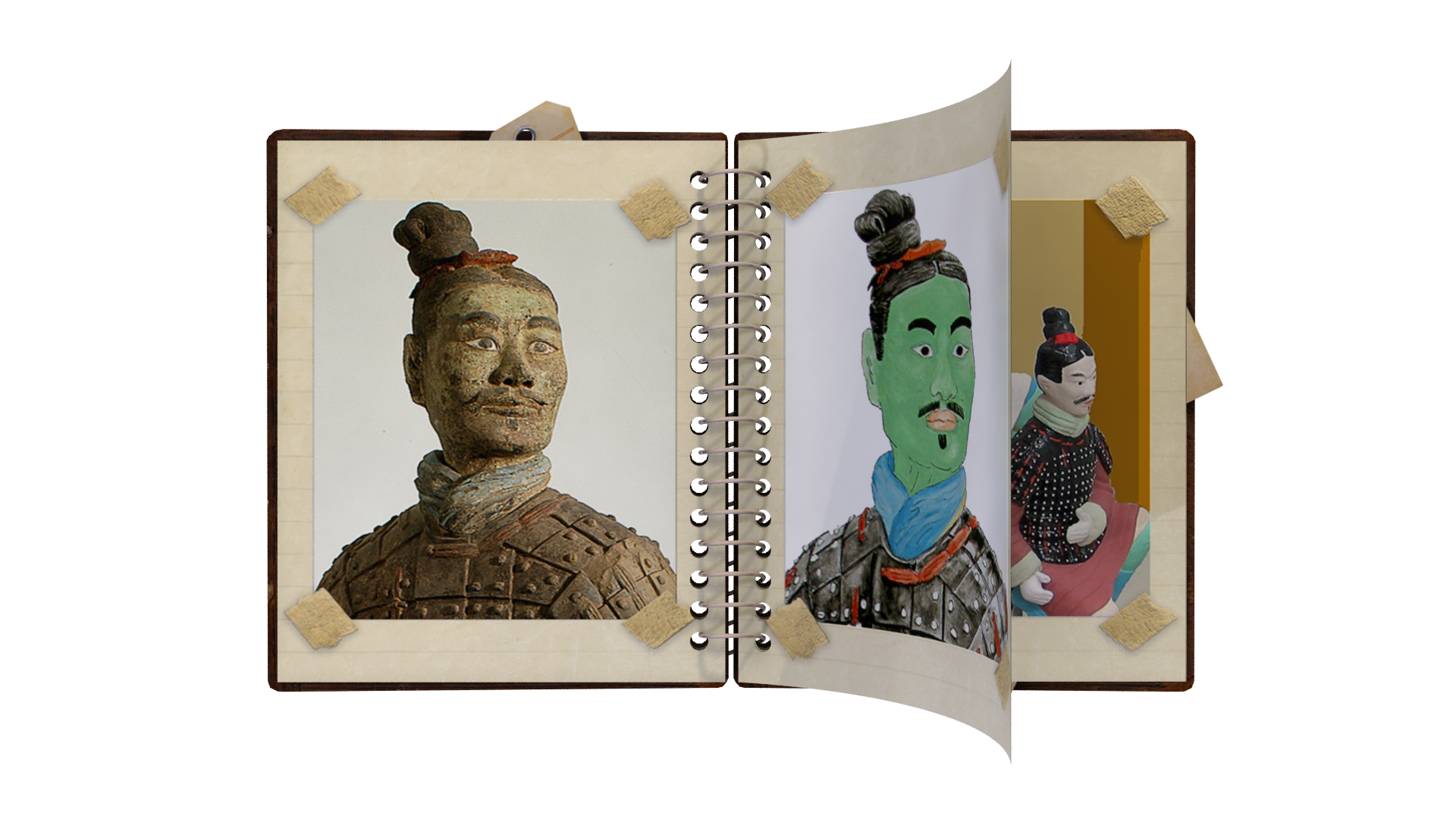
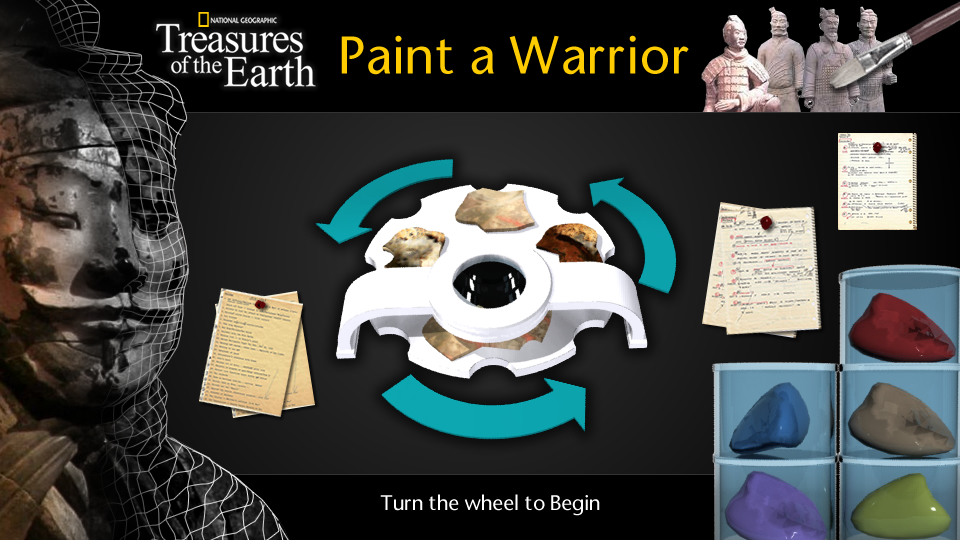
A notebook intro, then the painting screen
Before anyone touched the screen, I wanted to explain how archaeologists figured out the colors and show how the kiosk worked. So I drew and animated an intro that looks like a field notebook to walk them through it.
The film
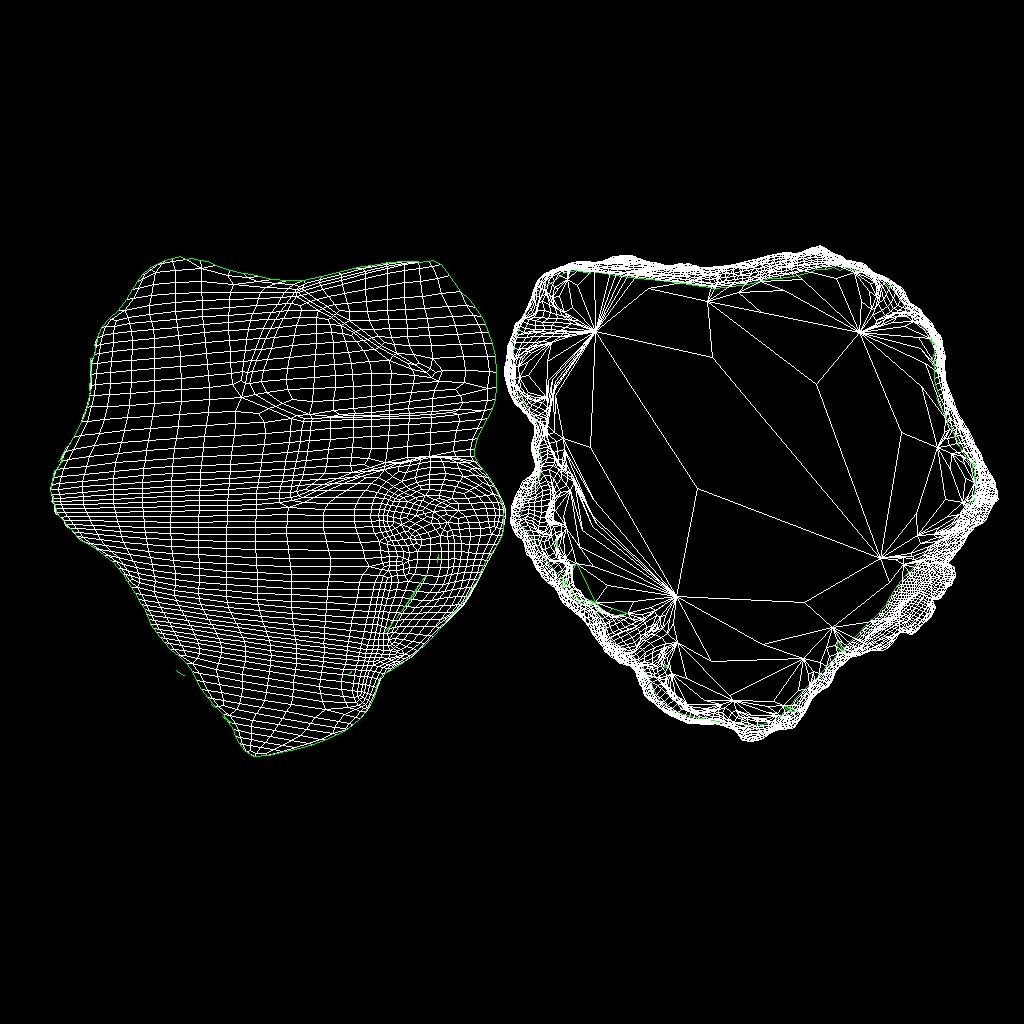
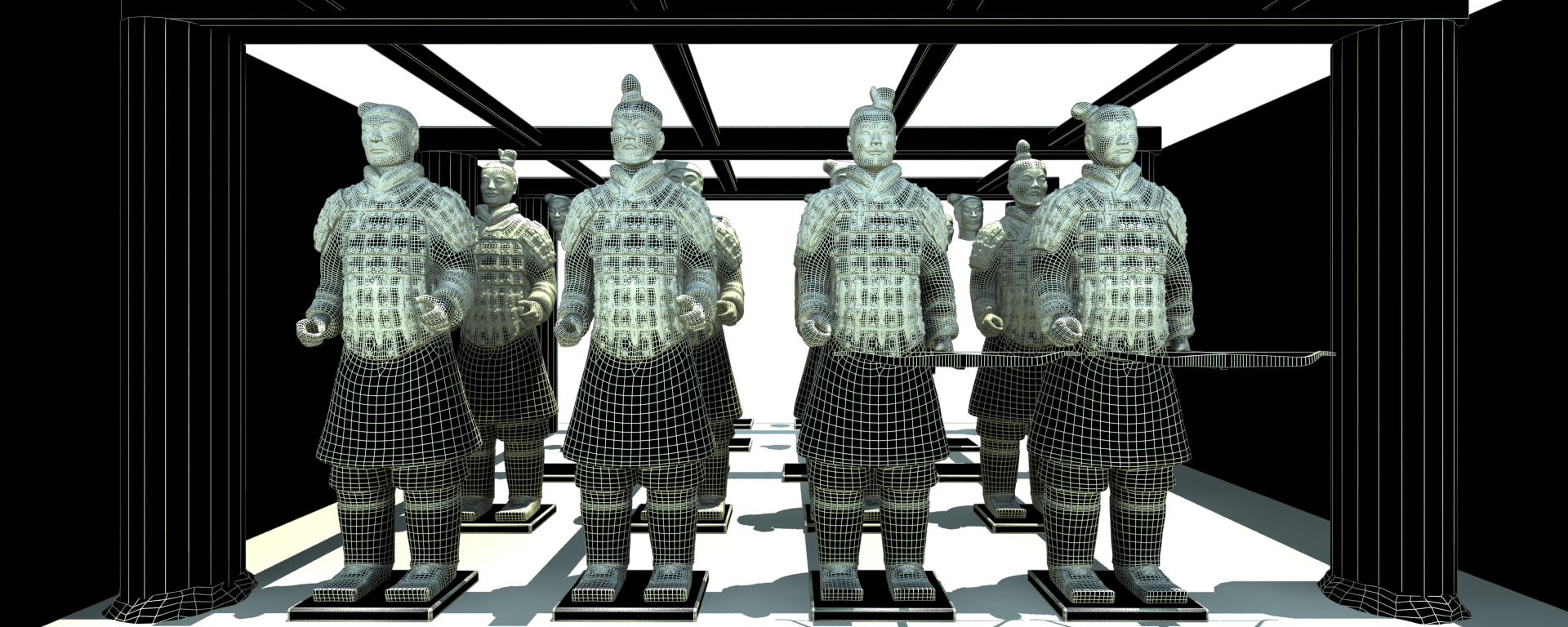
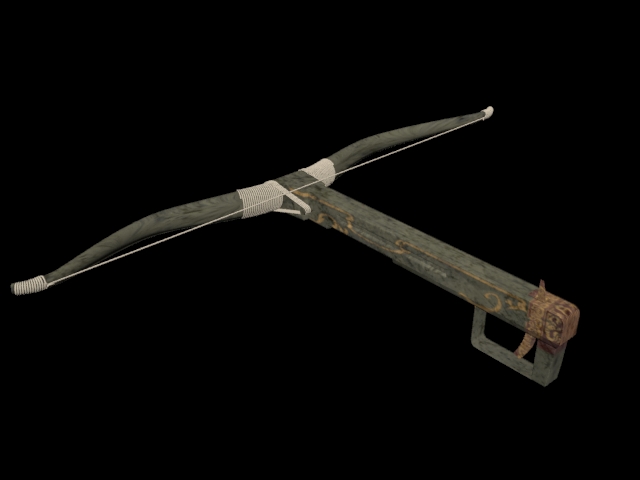
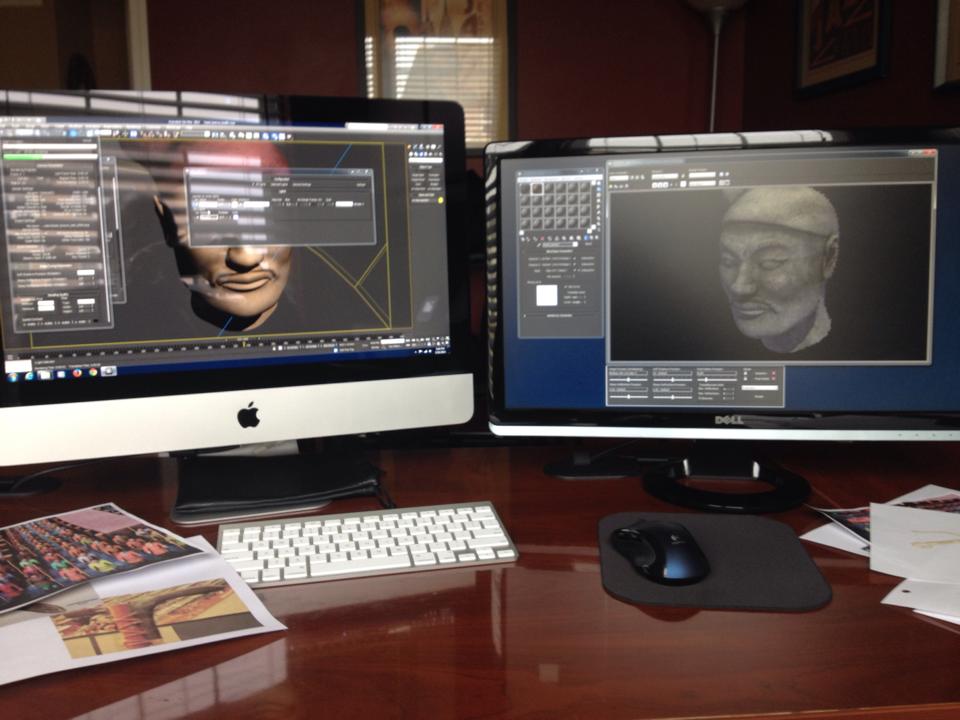
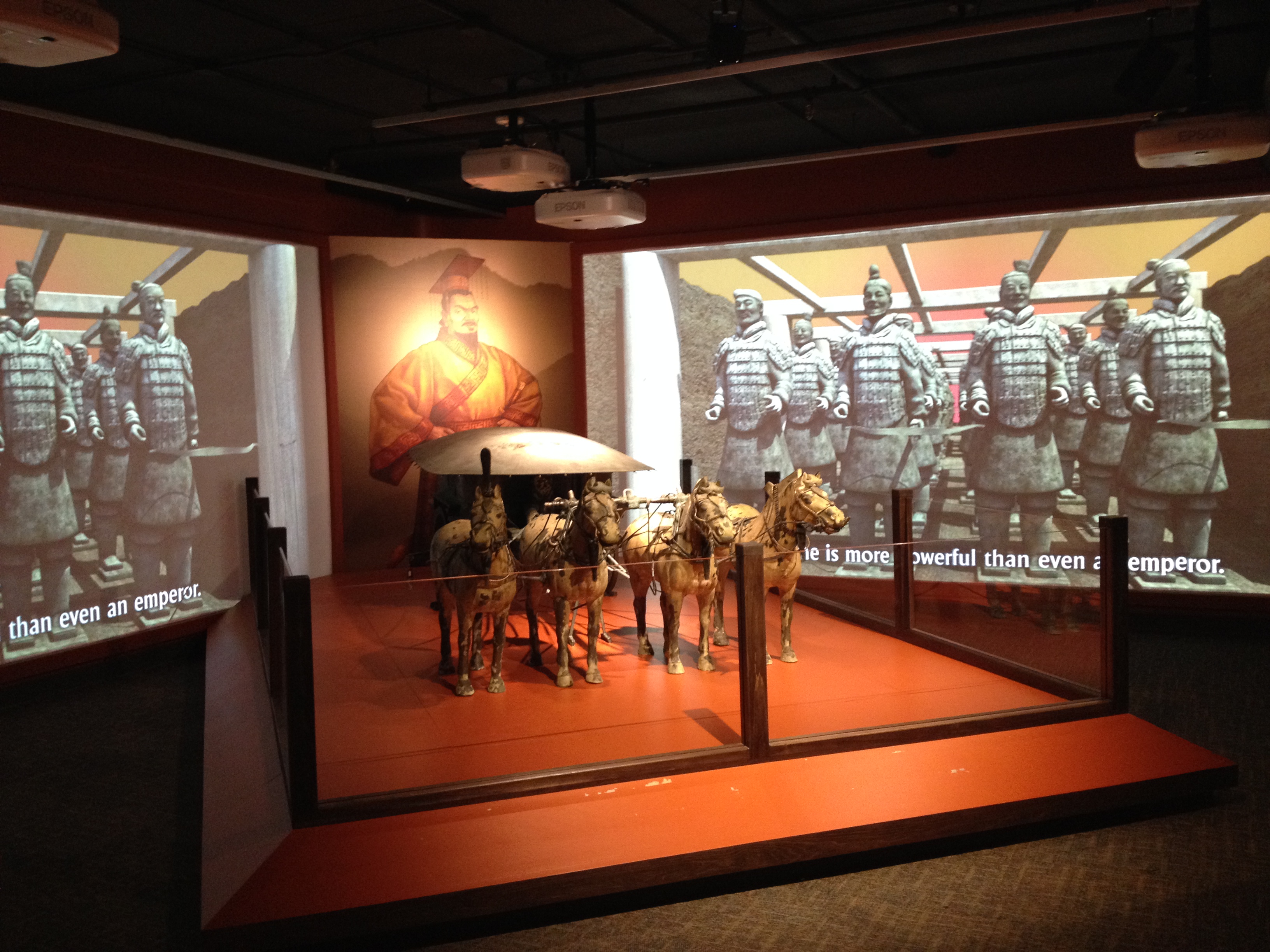
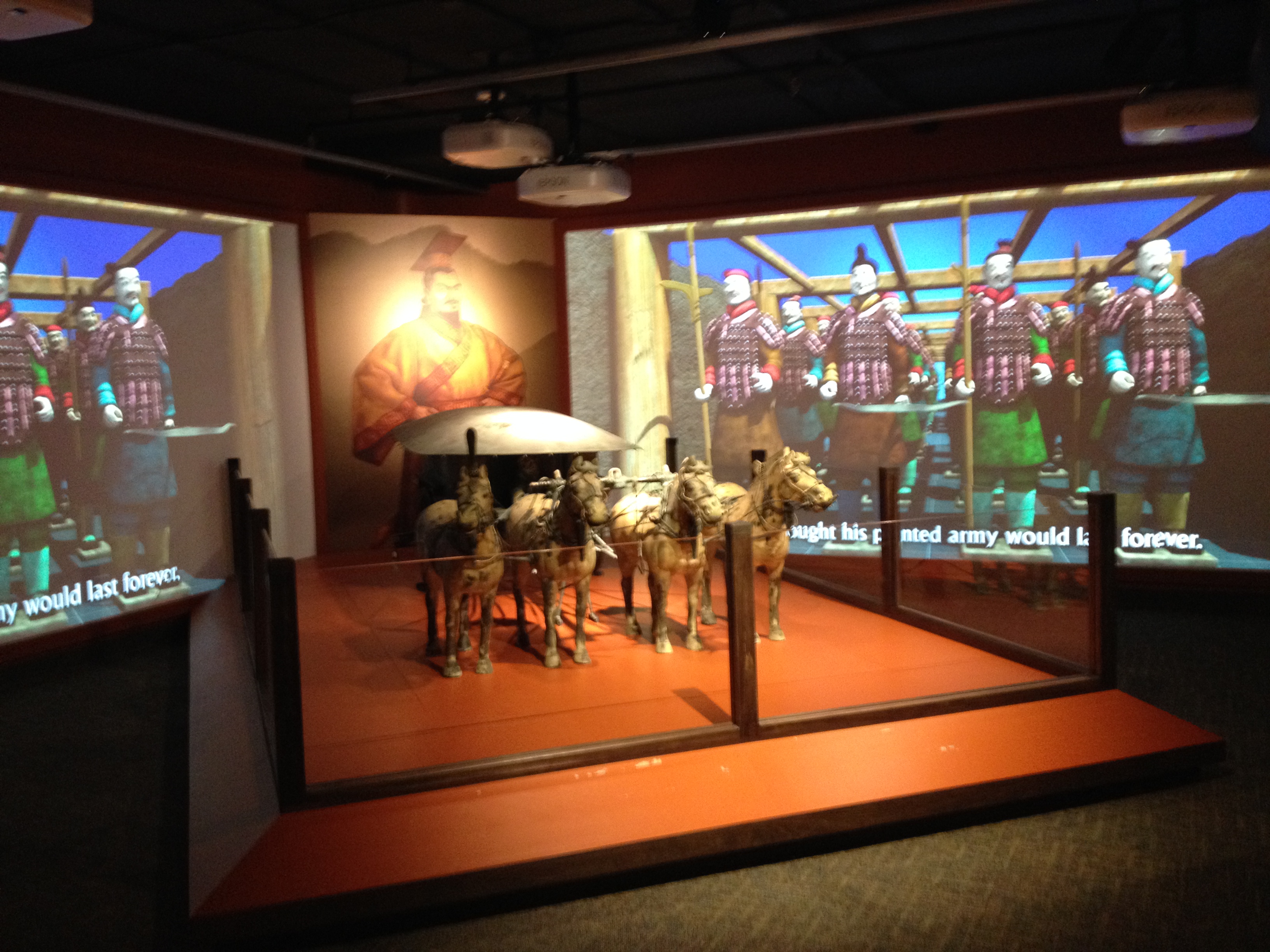
The museum also asked for a 3D film to loop in the exhibit, covering how the warriors were made, buried, and worn down to what we see now. I made it with a few former coworkers. Most of the time went into research: poring through National Geographic's documentation on the painting schemes, and then hundreds of test renders before the look was right.
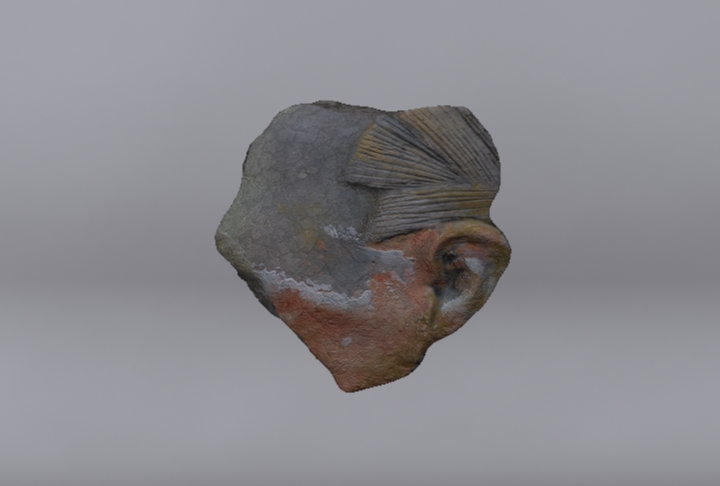
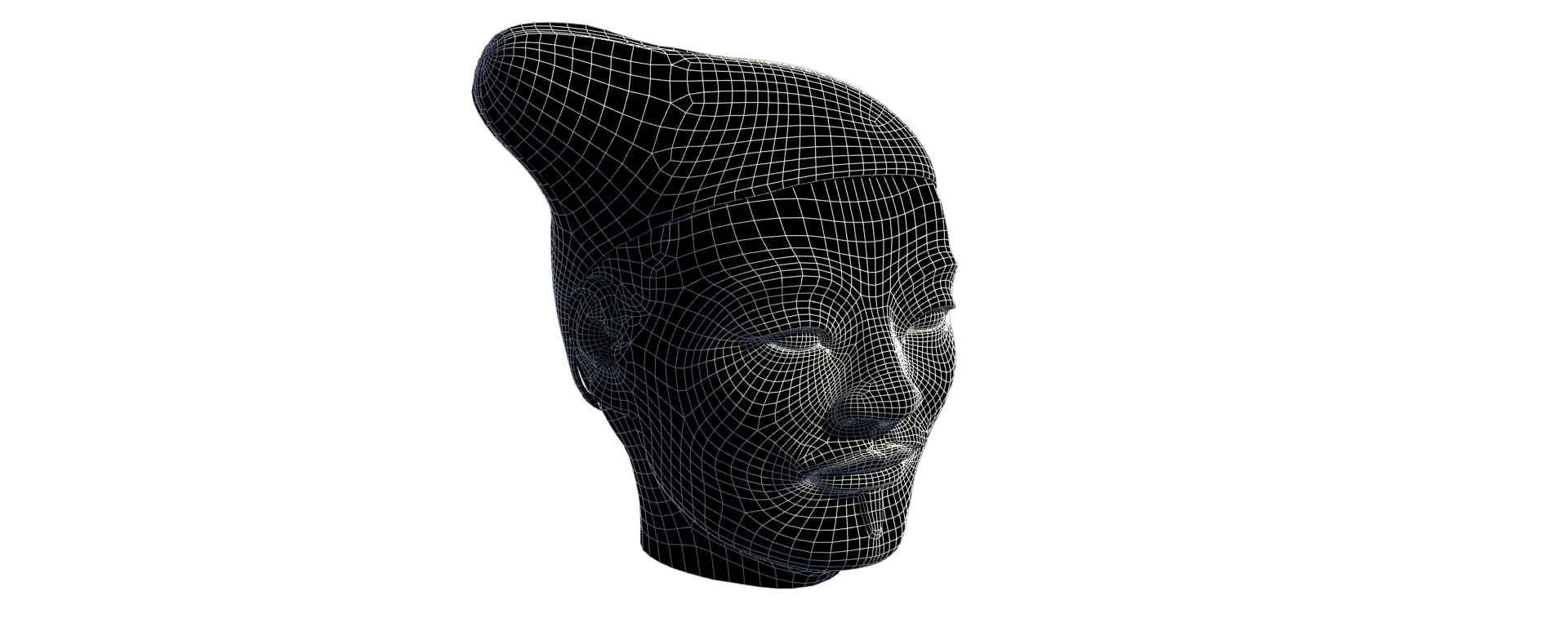
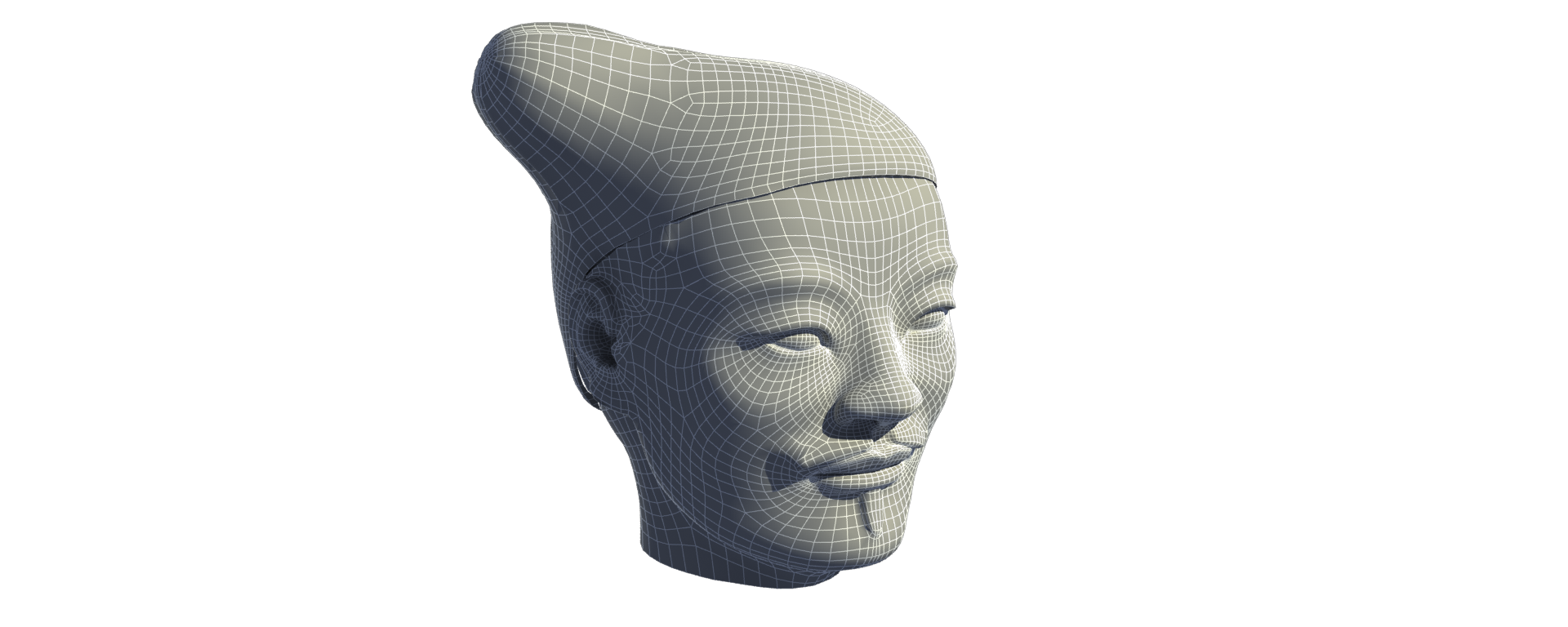
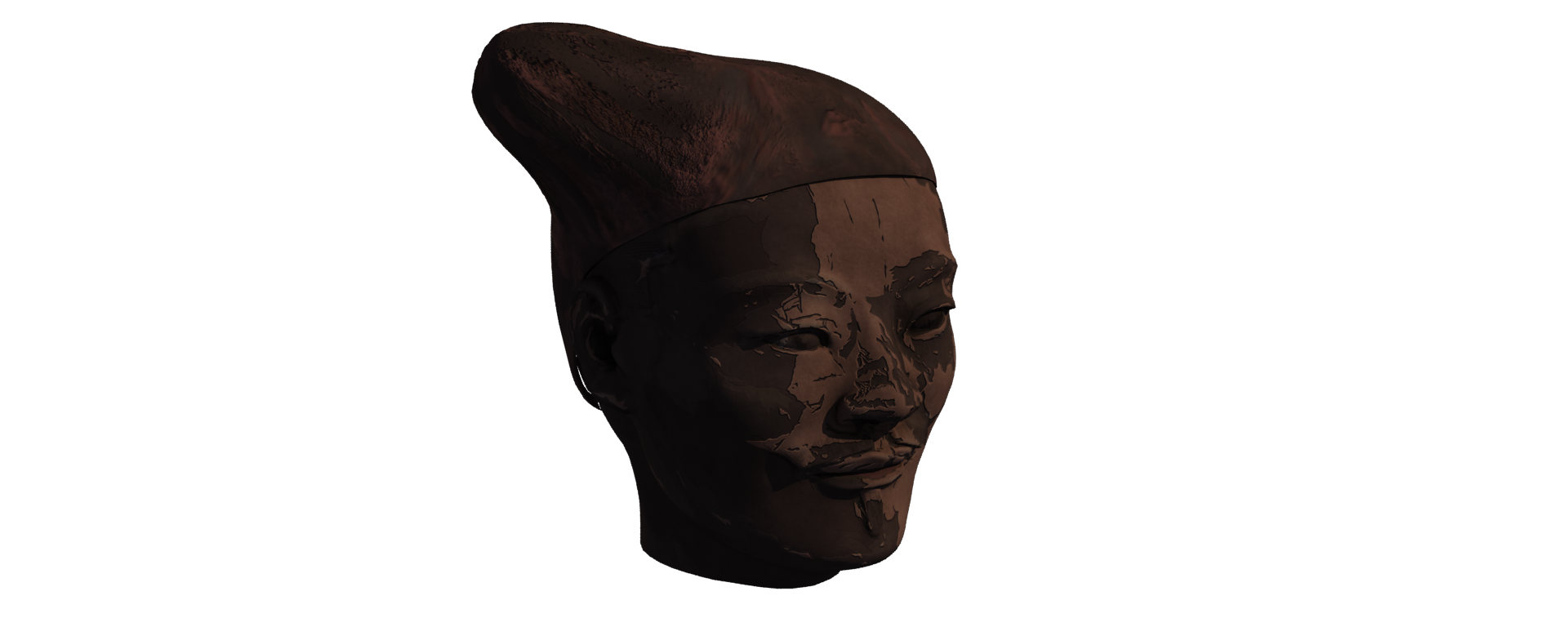
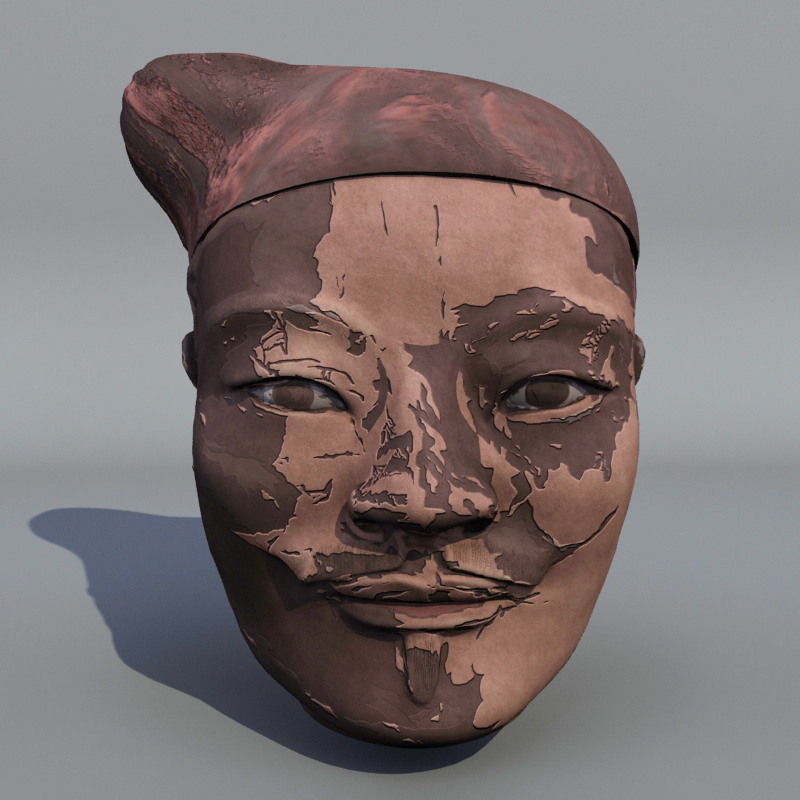
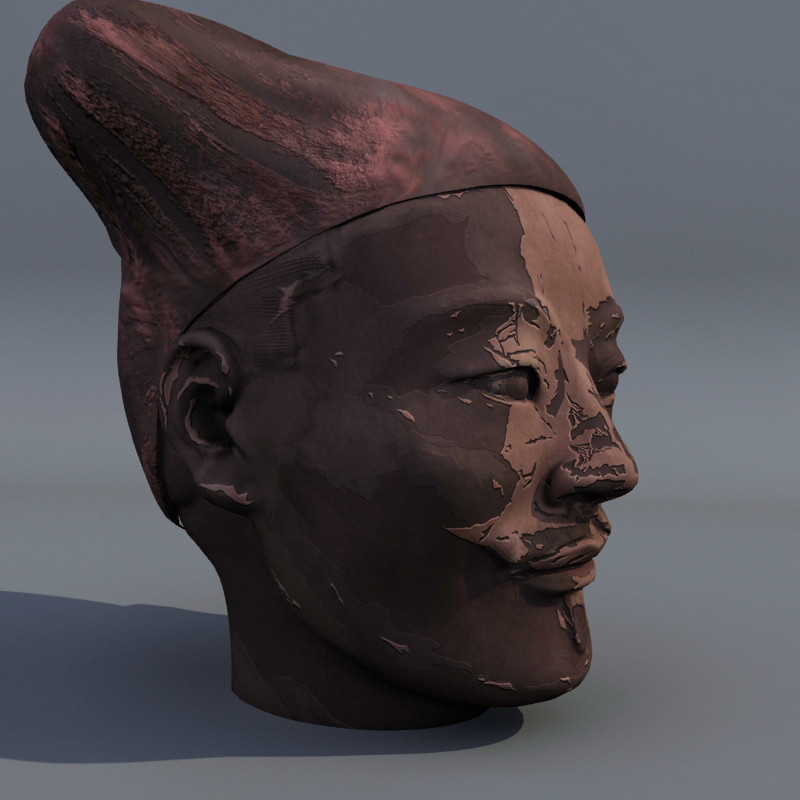
The hardest model was the head. It needed believable anatomy and paint we could defend historically, and it had to hold up at widescreen size. It went through several major revisions, including a rework of the eyes after the first review.
How it turned out
Both pieces were installed on schedule. The kiosk was the museum's first RFID interactive, and the project won an award. All of it got done within six months of my coming back to rebuild a creative department the museum had dissolved.
It's still one of my favorite projects, because it needed nearly everything I could do at once: research, interaction design, illustration, animation, 3D, and enough hardware work to get a chip in a fake shard talking to a touchscreen. Nobody had a playbook for that part, so we figured it out with the education team as we went.